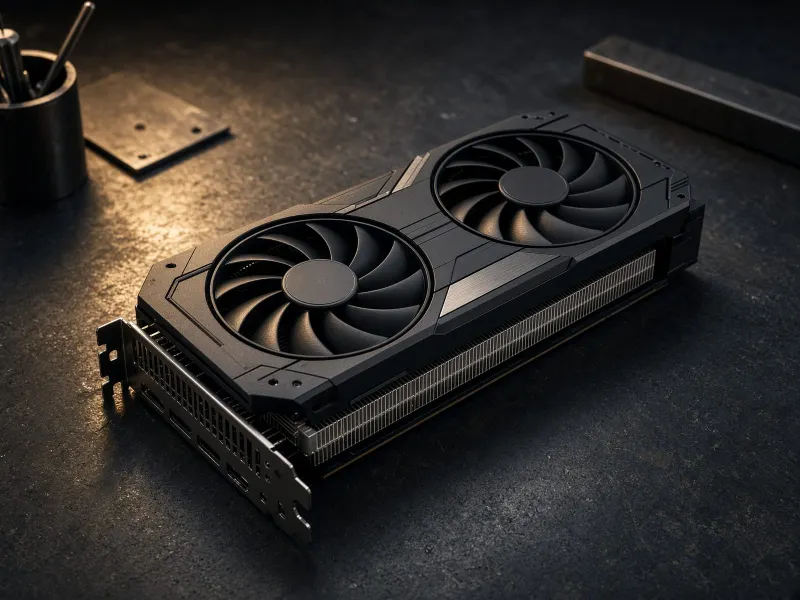
Current status
The RTX 3090 ComfyUI workflow is queued in the TokenByte benchmark log. The point of publishing the plan first is to make the evidence standard visible before the result exists. If the eventual article says the RTX 3090 is worth buying for a workflow, readers should be able to see exactly why.
Open the public queue
The benchmark queue tracks the status, target metrics, and evidence files required before this page can influence buying advice.
Setup to record
| Field | Required detail | Why it matters |
|---|---|---|
| GPU | Exact RTX 3090 model, VRAM, cooler, power limit if changed | Used cards vary by cooler, condition, and thermal behavior. |
| System | CPU, RAM, storage, OS, driver, case, PSU, airflow | Long image jobs expose weak power, storage, and cooling. |
| Software | ComfyUI version, custom nodes, model/checkpoint, workflow file | Results are not portable without the graph and software context. |
| Evidence | Screenshot, output sample, notes file, and raw measured values | Readers need receipts before trusting a buying verdict. |
Workflow fields
The baseline should start simple: one model, one prompt, one negative prompt, fixed resolution, fixed sampler, fixed steps, fixed seed, and one output folder. Only after that baseline is stable should the test add upscale chains, LoRAs, batches, or alternate resolutions.
Run checklist
- Save the workflow JSON and label it with the test date.
- Record prompt, negative prompt, resolution, sampler, scheduler, steps, seed, and batch size.
- Run the same baseline at least three times before publishing a speed or stability claim.
- Keep failure notes, not only the best output.
Results table to fill after measurement
| Run | Resolution | Workflow | Render time | VRAM note | Failure or quality note |
|---|---|---|---|---|---|
| Run 1 | Queued | Baseline | Pending | Pending | Pending original result |
| Run 2 | Queued | Baseline | Pending | Pending | Pending original result |
| Run 3 | Queued | Baseline | Pending | Pending | Pending original result |
Buying verdict gate
The RTX 3090 buying verdict should change only if the measured workflow shows practical value that justifies the whole used GPU build: card condition risk, power draw, heat, case clearance, PSU quality, and noise. VRAM alone is not enough; the complete build has to be stable and worth using.
Can support buying
- Baseline is repeatable across three runs.
- 24GB VRAM enables a workflow that lower VRAM struggles to hold.
- Thermals and noise are acceptable for the target user.
- Outputs and failure notes are published.
Cannot support buying yet
- No workflow file.
- No original screenshots or samples.
- Only one run.
- No heat, power, or failure notes.
Related guides
Read before spending
Use the RTX 3090 buying guide and ComfyUI workflow starter before chasing a used GPU deal.
RTX 3090 ComfyUI experiment FAQ
Has TokenByte completed the RTX 3090 ComfyUI benchmark?
No. This page is the public experiment plan. It should not be treated as a completed benchmark until measured render times, VRAM use, workflow files, screenshots, settings, and output samples are attached.
What will the RTX 3090 ComfyUI test measure?
The test will measure repeatable baseline render time, VRAM pressure, resolution, workflow file, prompt and seed, failure notes, output samples, and whether the workflow changes the buying verdict for a used RTX 3090.
Why test ComfyUI on an RTX 3090?
The RTX 3090 remains interesting for local AI because it offers 24GB of VRAM on the used market. ComfyUI workflows are a practical way to see whether that VRAM helps enough to justify used-card risk, heat, power, and noise.
What evidence is required before changing buying advice?
TokenByte should publish exact hardware, software versions, workflow file, model or checkpoint, prompt, resolution, sampler, seed, repeated runs, measured values, output samples, screenshots, and failure notes before changing a buying verdict.